About ISFNT-17
ISFNT
The International Symposium on Fusion Nuclear Technology remains one of the most important international gatherings dedicated to the advancement of fusion energy. It provides a multidisciplinary platform for researchers, engineers, and stakeholders to present emerging developments, exchange expertise, and identify pathways to address critical challenges in fusion nuclear technology. The symposium encompasses both the needs of current fusion facilities and the technological requirements of future demonstration and commercial reactors. Contributions covering science, engineering, materials, fuel cycle systems, safety, design methodologies, computational modelling, experimental programmes, and enabling technologies are welcomed. ISFNT continues to support the global effort to transform fusion energy from a scientific aspiration into a practical source of low-carbon electricity.
- Plasma-Facing High Heat Flux Components
- Blanket Technology
- Fuel Cycle and Tritium Processing
- Material Engineering for FNT
- Vacuum Vessel and Ex-vessel Systems
- Nuclear System Design
- Safety Issues and Waste Management
- Models and Experiments for FNT
- Repair and Maintenance
- Burning Plasma Control and Operation
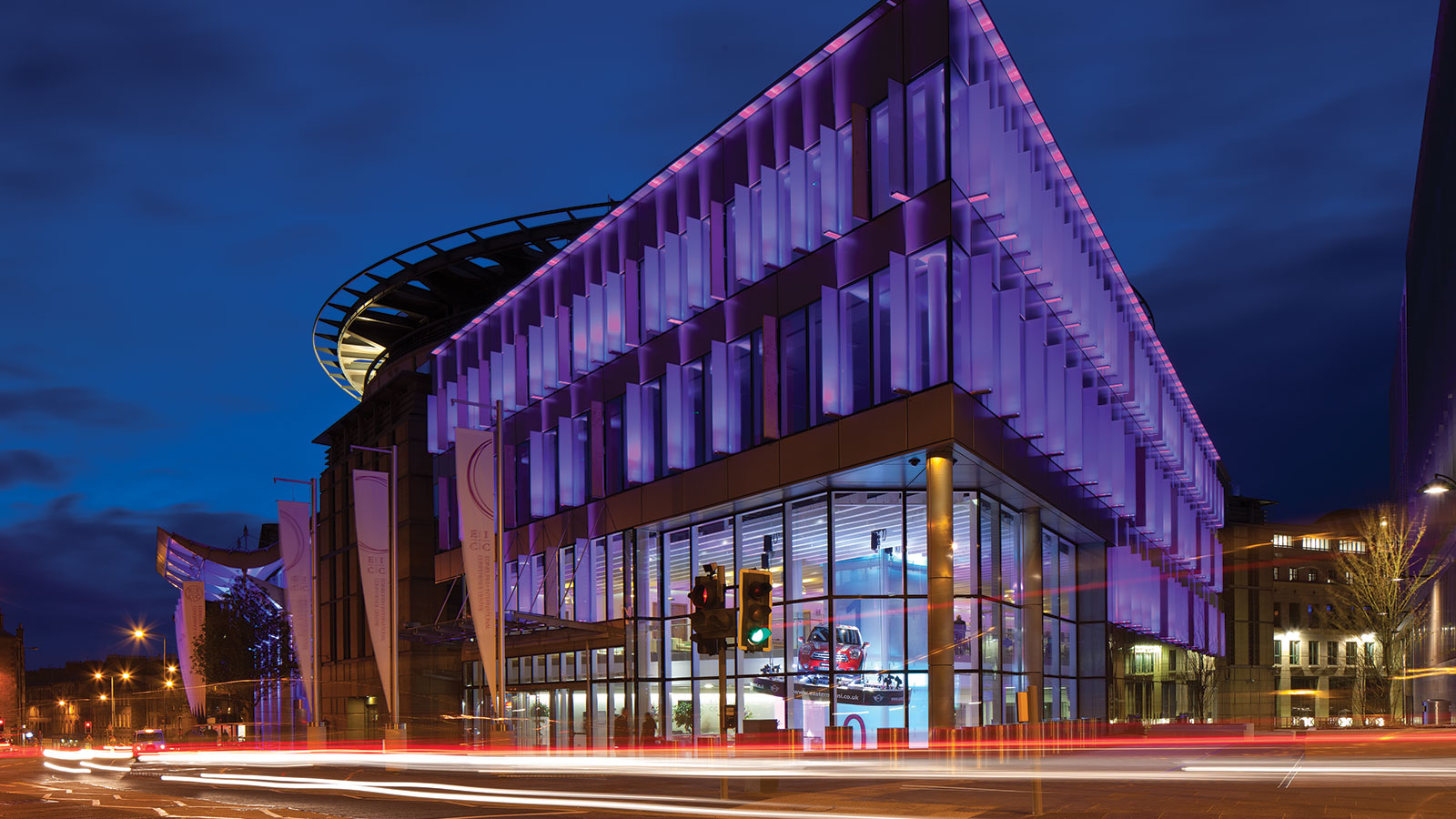
Edinburgh International Conference and Exhibition Centre (EICC)
The EICC consider it both a moral and business imperative to place sustainability at the heart of every event we host, at every step of the process. Their sustainability programme includes a series of initiatives which ensure the events held there demonstrate best practice in sustainability, without compromising on the standards of excellence for which events at the EICC are renowned.
When it comes to managing the venue in a sustainable manner, the EICC has an excellent track record in waste management, with zero waste from the premises sent to landfill. Since 2013 the EICC has also reduced its carbon emissions by 60%.
Waste
The local waste management partner provides 100% recycling, and NOTHING is sent to landfill.
- General waste is taken to a local facility where it the majority is recycled. Anything which can’t be recycled is turned into energy.
- Food waste goes to a local facility and, using aerobic digestion, it is turned into energy and biofertilizer.
- Waste oil from the kitchen is refined into Biodiesel.
- Glass waste is turned into aggregate or insulation wool.
Energy
EICC is powered using a 100% renewable energy tariff supplied by EDF energy which is backed by UK REGO (Renewable Energy Guarantees of Origin). It is produced from a blend of sources including hydro, wind, solar, biomass and landfill gas.